

Driver Safety Rules
Rules That Protect Our Drivers & Our Name
Every Majha Wala driver follows these chapters — non-negotiable standards that keep you safe, keep the freight moving, and keep our FMCSA record clean. Drivers review and sign these rules at orientation and every year after.
USDOT 4163476 · MC 1600290 · Edmonton, Alberta, Canada
1. Hours of Service & ELD
- Never exceed HOS limits — 13 hours driving / 14 hours on-duty per day in Canada; 11/14 under US rules when running south.
- Log every duty-status change on the ELD the moment it happens — no back-filling, no exceptions.
- Take the required 30-minute break within the first 8 hours of driving.
- If dispatch and your HOS clock disagree, the clock wins. Tell dispatch immediately — you will never be punished for refusing an illegal load.
- Keep the previous 14 days of logs available for inspection at all times.
- Report any ELD malfunction to dispatch within 24 hours and keep paper logs until it is fixed.
2. Pre-Trip & Post-Trip Inspections
- Complete a full pre-trip inspection before the wheels move — every trip, no shortcuts.
- Brakes, tires, lights, coupling, fluids and load securement are personal responsibility — if you sign it, you own it.
- Never move a unit with a defect that affects safe operation. Red-tag it and call maintenance.
- Submit your DVIR at the end of every shift, even when there are no defects.
- Re-inspect the load and securement within the first 80 km (50 miles), at every duty change, and every 3 hours or 240 km.
3. Load Securement
- Know the cargo securement standard for what you haul — minimum 2 tie-downs per piece, plus one per 10 feet of length.
- Inspect straps, chains and binders before use; damaged securement is removed from service, not used 'one more time'.
- Flatbed and oversize loads are tarped, flagged, bannered and permitted exactly as required — no guesswork.
- If a load shifts, stop at the first safe location and re-secure before continuing.
- When in doubt, add another strap. Over-secured is always right.
4. Defensive Driving & Road Conduct
- Keep a minimum 6-second following distance at highway speed — more in traffic, at night or in bad weather.
- Speed limits are maximums, not targets. Posted speed minus conditions is your real limit.
- No hand-held phone use while driving — ever. Calls and messages go through hands-free or wait for a stop.
- Signal every lane change, check mirrors every 5–8 seconds, and always leave yourself an out.
- Fatigue is impairment. If you're tired, you stop — tell dispatch, park safely, no questions asked.
- Zero tolerance for alcohol or drugs, including cannabis, within 8 hours of driving or while on duty.
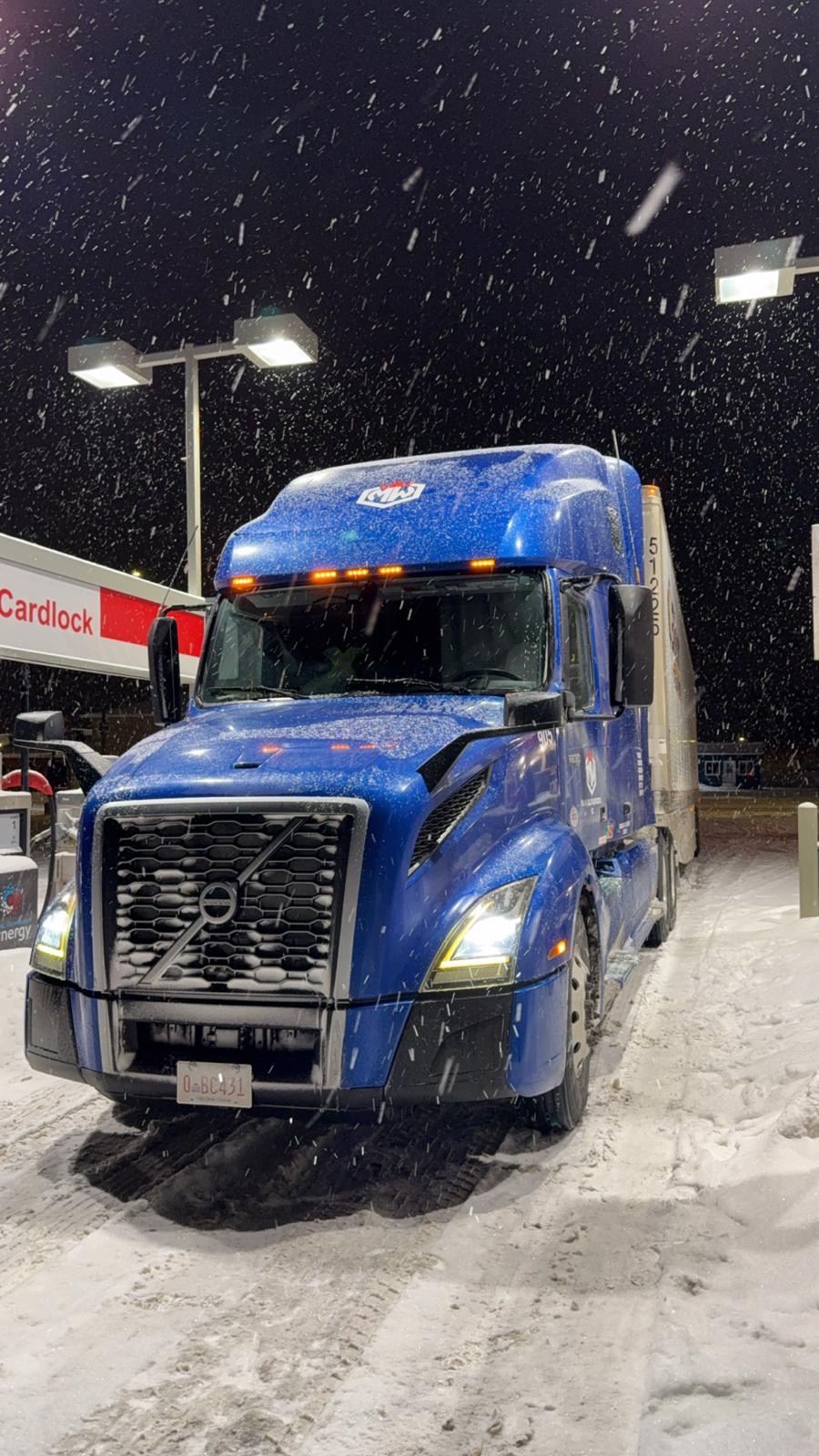
5. Winter & Adverse Weather
- Complete the Winter Training Program before your first winter dispatch — all 8 modules.
- Carry chains October to April on mountain routes and know how to install them.
- Never use the engine brake on ice or snow.
- You have full authority to shut down for weather. Safety outranks every appointment.
- Keep the winter survival kit in the cab from October 1 to April 30.
6. Border Crossing & Customs
- Passport and FAST card (if issued) must be valid and carried at all times on cross-border loads.
- Verify paperwork — BOL, customs entries, e-manifest — before reaching the border, not at the booth.
- Answer officers directly and honestly; declare everything; never joke at an inspection station.
- Seal numbers are checked against paperwork at pickup and verified at delivery.
- Report any border delay over 60 minutes to dispatch so customers can be updated proactively.
7. Incident, Accident & Breakdown Protocol
- After any collision: protect the scene, call 911 if anyone is hurt, then call dispatch — in that order.
- Set out warning triangles within 10 minutes: 30 m behind, 30 m ahead on divided highways, per regulation.
- Take photos of everything before units are moved, if it is safe to do so.
- Never admit fault or discuss responsibility at the scene — facts only, to police and dispatch.
- Post-accident drug and alcohol testing is mandatory per FMCSA/Canadian rules — cooperate fully.
- Breakdowns: hazards on, triangles out, call maintenance and dispatch, stay clear of traffic.
8. Company & Equipment Care
- Treat the truck like you own it — clean cab, no smoking in units, no unauthorized passengers.
- Fuel at approved stops, keep receipts, and record odometer readings accurately.
- Park in secure, well-lit areas; lock the unit and seal the trailer every time you leave it.
- Report damage immediately — small problems reported early never become big ones.
- Represent the brand professionally at every shipper, receiver and scale — you are the face of Majha Wala.
Download Printable PDF
Full rules with a signed-acknowledgement page — print, sign and keep a copy in your driver file.
Rules Knowledge Check
10 questions from the 8 chapters. Score 7/10 or better to pass.
1. Maximum daily driving time in Canada under HOS:
2. The 30-minute break must be taken within the first:
3. Loads must be re-inspected within the first:
4. Minimum tie-downs per piece of cargo:
5. Minimum following distance at highway speed:
6. Hand-held phone use while driving is:
7. After a collision, the correct order is:
8. The winter survival kit must be in the cab:
9. Who has authority to shut down for bad weather?
10. Cross-border paperwork should be verified:
These rules are reviewed annually and updated when regulations change. Questions about any rule? Contact our Safety & Compliance team at safety@mwtransport.ca.